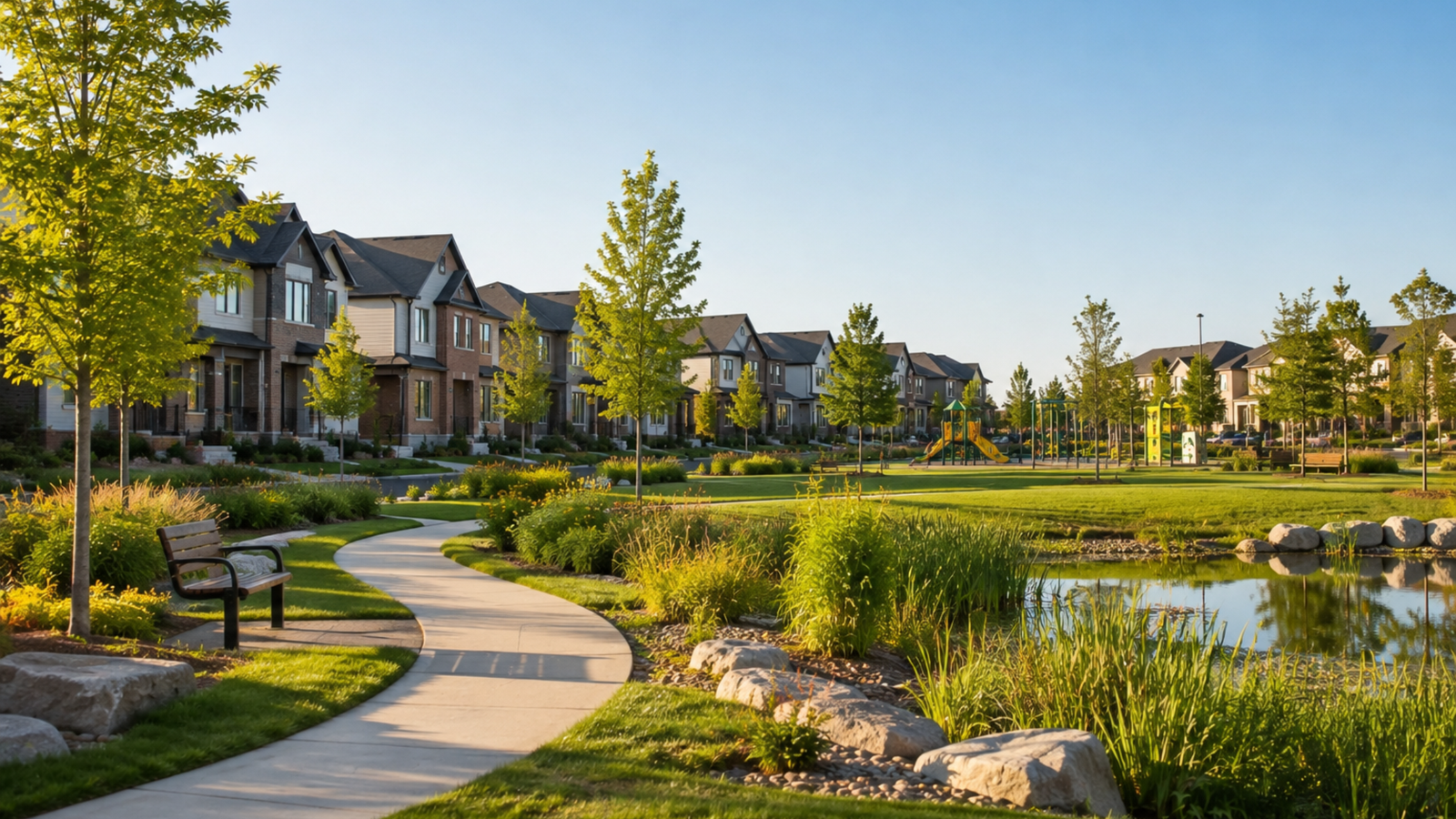
What makes you look at a new neighbourhood and think, “I could actually see myself living here”? It is often the little things: the park around the corner, a safe path to walk along, shops within easy reach, green spaces that break up rows of homes, and infrastructure that makes everyday life easier. As more families move beyond Toronto in search of space without giving up convenience, Ontario’s residential development is changing with them. New communities are being planned with a bigger picture in mind: creating homes that meet today’s needs while building neighbourhoods that remain connected, liveable and sustainable for years to come.
What Does Sustainable Living Really Mean Today?
When people hear the term “sustainable,” they often think about either solar panels or recycling bins. However, “sustainable” means something completely different when talking about entire neighborhoods.
How can we define sustainability in real life?
- Wildlife Conservation: Building structures in a way that protects existing wetlands and trees.
- Energy-efficient design: Using various technologies like insulation, modern windows or advanced heating technologies to make buildings more energy-efficient and reduce utility bills.
In fact, homes built to Natural Resources Canada’s ENERGY STAR for New Homes standard use about 20% less energy than typical new builds a meaningful difference on monthly utility bills.
- Walkable design: Developing roads for children to bike to recreational areas and for parents to walk to grocery stores.
- Providing local services: Making sure schools, hospitals and other local services develop along with the population living in the neighborhood.
With this approach to new developments, people in communities can lead sustainable lives without harming nature, supporting long-term sustainable community growth across expanding regions.
Why Master-Planned Design Matters
Have you ever visited a neighbourhood where homes were built first, but parks, shops, schools or transport connections came much later? Without these essentials, even attractive housing can feel isolated and disconnected from everyday life. This is one reason many developers are taking a more coordinated approach through master-planned communities, where homes, amenities, public spaces and infrastructure are considered as part of the same overall plan.
A good example is Newbrook Brookfield Residential, where residential development is planned alongside community features that support everyday living. Instead of treating each element separately, master planning considers how people will move through, use and experience the neighbourhood as it grows.
Master-planned communities can offer several distinct advantages:
- Better Traffic Management: Carefully planned roads, pathways and connections can make it easier and safer for pedestrians, cyclists and drivers to move around the community.
- Family-Oriented Parks: Dedicated parks and playgrounds give families accessible spaces to spend time outdoors, play and enjoy the neighbourhood.
- Stronger Community Connections: Shared public spaces create more opportunities for neighbours to meet, interact and develop a greater sense of belonging.
- More Convenient Daily Living: When amenities, green spaces and essential infrastructure are considered alongside housing, residents can have easier access to the places and services they use regularly.
Connecting Small-Town Charm with Modern Transit
Can a neighborhood offer a calm, quiet lifestyle while keeping you connected to the big city? Absolutely. In places like Newcastle in Durham Region, modern transportation planning plays a key role in everyday convenience.
Living in a well-connected suburban town offers distinct advantages:
- Highway Accessibility: Quick access to Highway 401 and Highway 35/115 makes cross-region drives and weekend getaways simple.
- Public Transit Links: Durham Region Transit routes connect smaller neighborhoods to nearby hubs like Bowmanville and Oshawa.
- Regional Rail Access: Nearby GO Transit stations let commuters head straight into downtown Toronto without rush-hour gridlock.
When transportation options are well planned, residents get the best of both worlds: small-town peace with fast access to major employment centers.
Flexible Housing for Every Stage of Life
Community thrives when it embraces residents of all age groups, from young couples seeking their first home to families looking to add space and retirees looking to downsize. New developments support this diversity by offering many home types and a range of lot sizes.
By offering versatile housing, developers pave the way for true sustainable community growth where residents can stay in the same area as their needs change:
- Young Buyers Townhouses: Newly constructed two-story townhouses are stylish, with spacious, convenient layouts and affordable prices.
- Houses for Expanding Families: Single-family homes, characterized by a wide choice of floor plans, provide extra bedrooms, offices and backyards for families.
- Easy Living: Well-designed homes let owners spend weekends relaxing and enjoying their time instead of doing chores.
Building a Brighter Future for Durham Region
What kind of community do we want to leave behind for the next generation? As more families choose Durham Region for its space, connectivity and quality of life, the way new neighbourhoods are planned matters more than ever. Thoughtful urban planning, environmental responsibility and family-focused development can help communities grow without losing the qualities that make them appealing in the first place.
When new homes are supported by well-planned infrastructure, green spaces and long-term community considerations, residents benefit from more than a place to live. They gain an environment designed to support everyday wellbeing while helping the wider community grow sustainably.
Looking for modern townhomes or detached homes in Newcastle? Explore Brookfield Residential to discover your next home.